Mastering Perspective: Essential Tips for Art Students
- Mayuri Das
- Mar 25, 2024
- 3 min read
Updated: Apr 23, 2024
Introduction: Understanding and mastering perspective is a crucial skill for any artist. Whether you're drawing landscapes, cityscapes, interiors, or characters, perspective adds depth and realism to your artwork. However, it can be a challenging concept to grasp, especially for beginners. In this blog, we'll explore some essential tips to help art students improve their drawing skills in perspective.
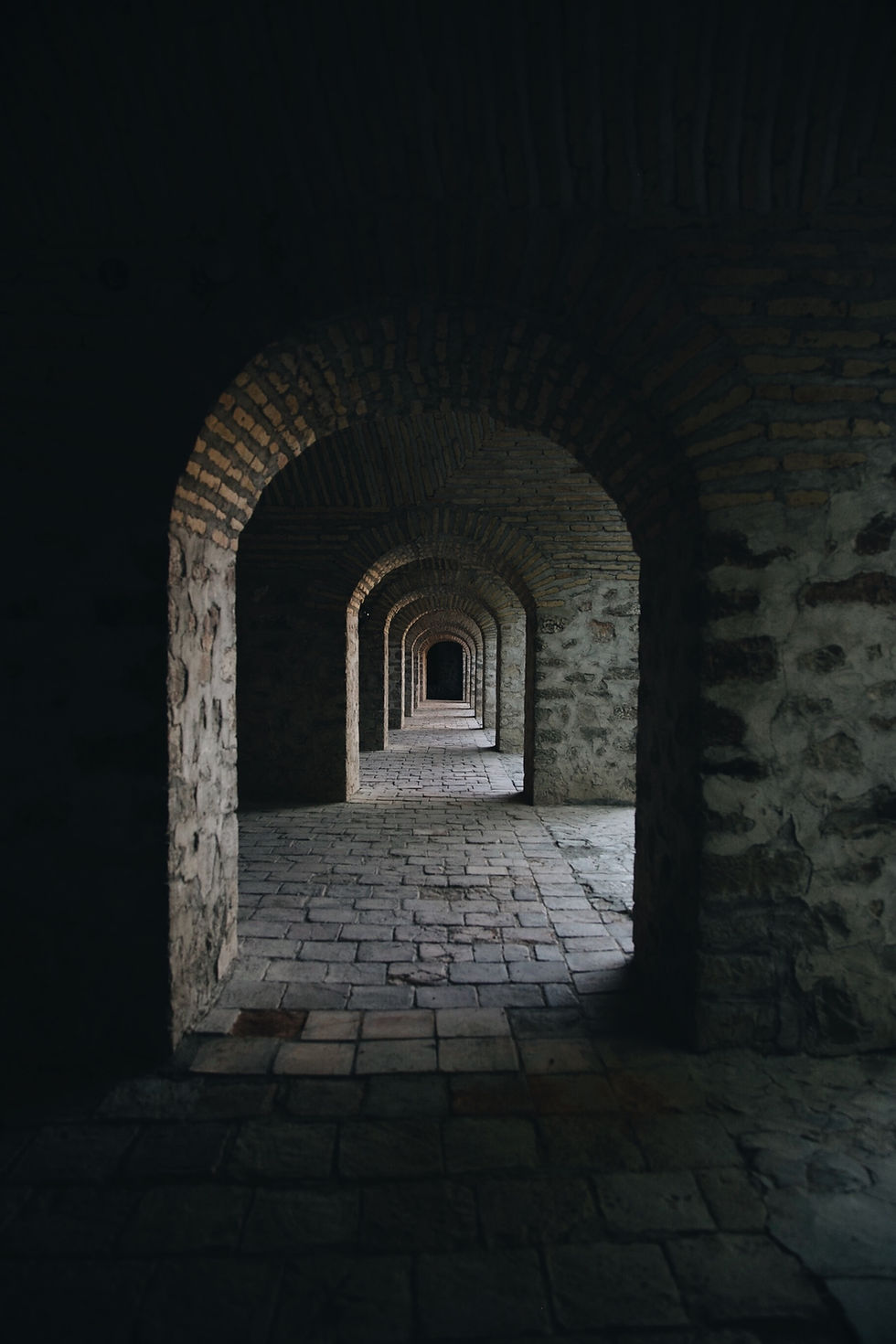
Learn the Basics: Before diving into complex scenes, it's essential to grasp the fundamentals of perspective. Understand the different types of perspective, such as one-point, two-point, and three-point perspective. Study vanishing points, horizon lines, and how objects appear smaller as they recede into the distance. Solidify your understanding through practice sketches and exercises.
Use a Horizon Line: The horizon line is where the sky meets the ground or any other surface in your scene. It serves as a reference point for establishing the viewer's eye level and the placement of vanishing points. Make sure to incorporate a horizon line into your drawings, and adjust its position based on the viewpoint of your scene. Buy your grid sketch book for perspective drawing - https://amzn.to/3VCUgQk
Establish Vanishing Points: Vanishing points are crucial elements in perspective drawing, as they determine the convergence of parallel lines. In one-point perspective, all lines converge to a single vanishing point on the horizon line. In two-point perspective, lines converge to two vanishing points on the horizon line. In three-point perspective, lines converge to three vanishing points, including one above or below the horizon line. Place vanishing points accurately to create realistic depth in your drawings. Buy your grid sketch book for perspective drawing - https://amzn.to/3VCUgQk
Use Construction Lines: Construction lines, also known as guidelines, help map out the structure of objects and maintain perspective accuracy. Start by lightly sketching basic shapes and lines to establish proportions and perspective before adding detail. These preliminary lines can be erased or refined later once the structure is established.
Practice Foreshortening: Foreshortening is the visual distortion that occurs when objects appear shorter in perspective due to their angle relative to the viewer. Mastering foreshortening is essential for creating dynamic and realistic compositions. Study how shapes and forms change as they recede into space, and practice drawing figures and objects from various perspectives to improve your foreshortening skills.
Pay Attention to Scale: Maintaining consistent scale is crucial for creating believable scenes in perspective. Objects closer to the viewer should appear larger, while those farther away should appear smaller. Pay attention to the relative size of elements within your composition to ensure accuracy and coherence.
Experiment with Depth: Don't be afraid to experiment with depth in your drawings. Play with overlapping shapes, atmospheric perspective, and varied line weights to create depth and dimensionality. Incorporate elements such as foreground details, mid-ground elements, and background scenery to enhance the illusion of depth in your artwork.
Study Perspective in Art History: Take inspiration from master artists who excelled in perspective drawing. Study works by Renaissance artists like Leonardo da Vinci, Raphael, and Albrecht Dürer, who pioneered techniques in linear perspective. Analyze how they utilized perspective to create realistic and immersive artworks, and apply those principles to your own drawings.
Conclusion: Mastering perspective is a journey that requires patience, practice, and dedication. By understanding the fundamentals, practicing regularly, and studying from both observation and art history, art students can improve their drawing skills and create captivating artworks with depth and realism. Keep experimenting, exploring, and pushing the boundaries of perspective to elevate your artistic abilities. Happy drawing!


Comments